Audit · USA
Can Zimbabweans Still Sponsor Family? Can They Get a U.S. Visa? Can They Enter America?
The central finding is narrower than saying family immigration is simply open or closed. The petition system can still operate while a separate visa-issuance restriction controls the final outcome. Families making expensive or irreversible decisions should check current U.S. government guidance and obtain case-specific legal advice where necessary.
Watch the audit
A Zimbabwean becomes a United States citizen. His wife is still in Zimbabwe. Another Zimbabwean has a green card. Her husband and young child are in Bulawayo. Both households can still begin a family immigration case. But can those families actually get to America in twenty twenty-six?
Can Zimbabweans still bring family to America in 2026? This helper follows the family-immigration route from the I-130 petition through NVC processing, the immigrant-visa interview and the final visa decision. The central contradiction is simple: qualifying U.S. citizens and lawful permanent residents can still file family petitions, but Presidential Proclamation 10998 can still prevent immigrant-visa issuance for covered Zimbabwean nationals.
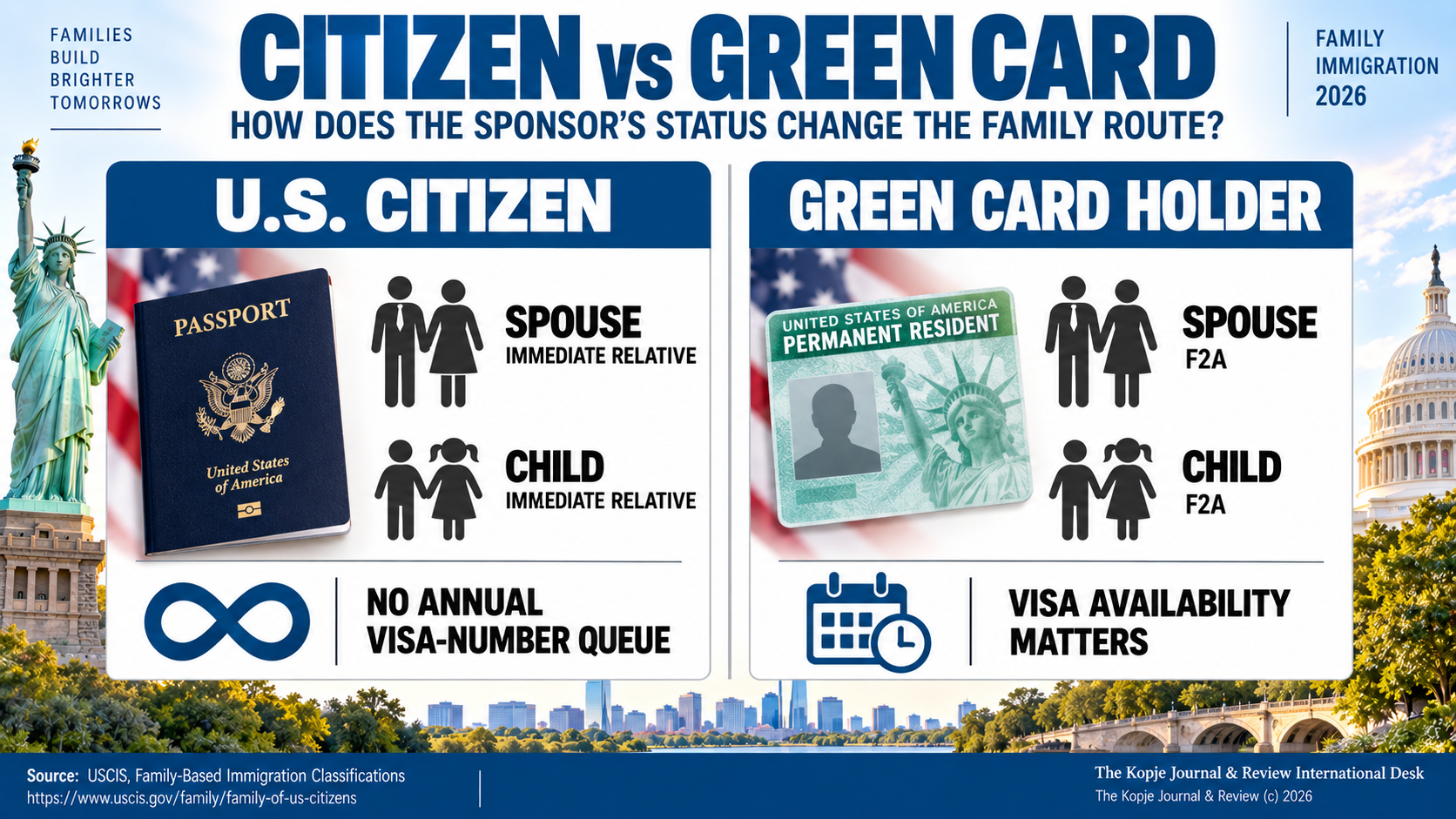
The route depends on the sponsor. A U.S. citizen's qualifying spouse and unmarried child under 21 normally fall into the immediate-relative system, but each immediate relative generally requires a separate petition. A lawful permanent resident's spouse and qualifying child normally use the F2A family-preference category, where visa availability still matters and a child may sometimes qualify as a derivative. For a child of a U.S. citizen, families should first establish whether the child may already have acquired U.S. citizenship.
The household ledger also matters. As of September 30, 2026, an online I-130 costs $625, the family-based immigrant-visa processing fee is $325 per applicant, and the NVC Affidavit of Support review fee is $120 where applicable. Medical examinations, travel, accommodation and time away from work can add substantially more. Routine immigrant-visa processing for Zimbabwe is now assigned to Johannesburg, adding a cross-border planning burden for many households.
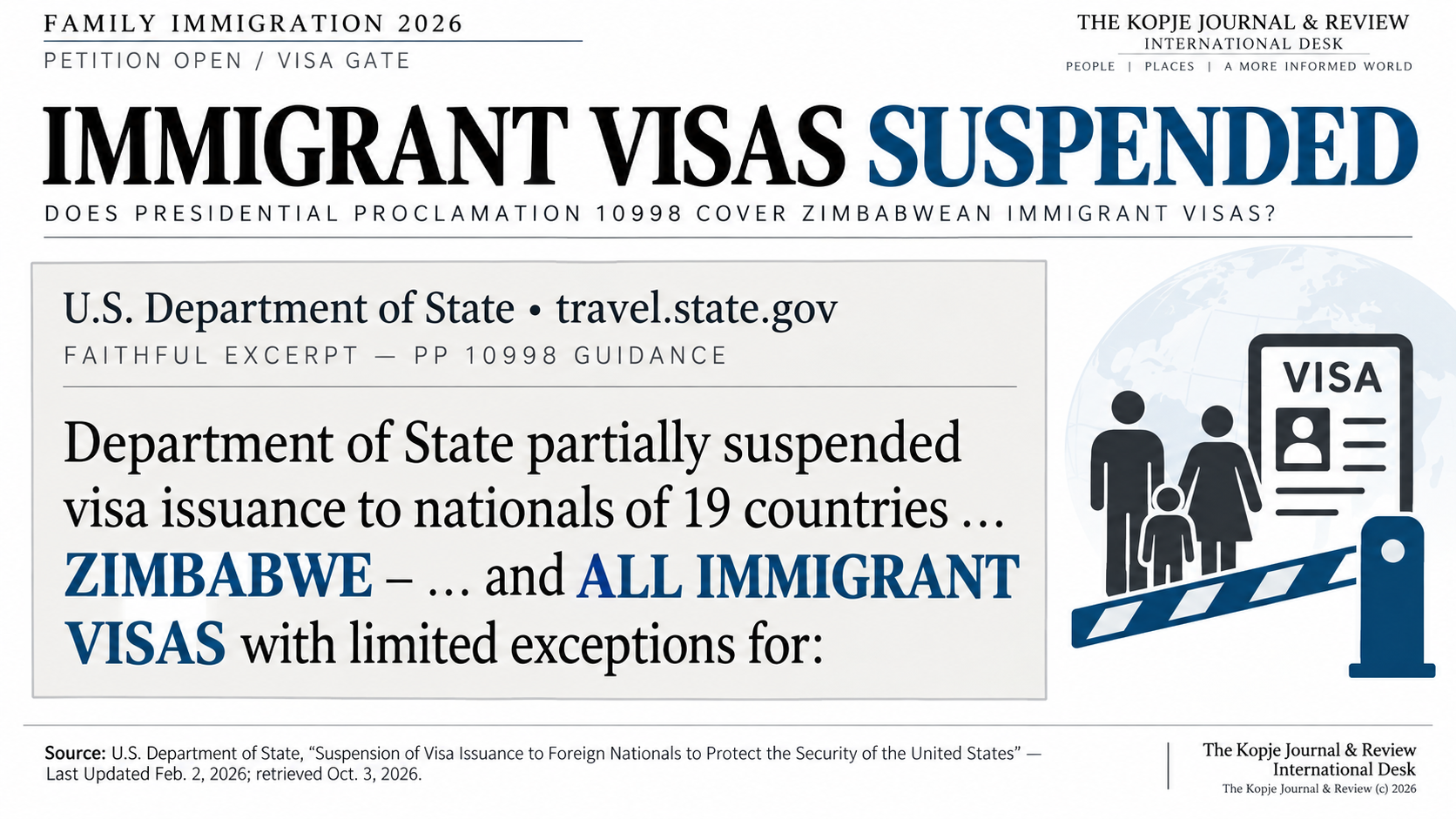
The decisive legal issue comes later. Presidential Proclamation 10998 took effect on January 1, 2026. Zimbabwe is in the proclamation's partial-suspension group, but the immigrant-visa restriction covers all immigrant categories for covered Zimbabwean nationals, subject to listed exceptions. Immediate-relative status by itself no longer creates a blanket family exception. Applicants may still submit applications and attend interviews, yet visa issuance can still be blocked.
This helper explains the practical questions families should separate: Can the petition be filed? Is a visa number available where required? Can NVC processing continue? Which consular post handles the case? Does the proclamation apply to this beneficiary? Was the person outside the United States on January 1, 2026? Did they already hold a valid visa? Are they a dual national using another passport? Is a listed or case-by-case exception potentially relevant?
The evidence